Sunday, 25 October 2015

Facts & Digressions in Fiction: Prose Workshop with Helen Hagemann, Friday 30th October. Class to read three extracts from Honey Brown's Red Queen. A writing exercise on "digression" and discussion will revolve around creating space for facts and digressions, esp. Brown's limited facts.

1.00pm - 3.00pm: Room 3, Upstairs, FAC North Wing
OOTA $20 - NON-OOTA $25

I Digress
For certain kinds of readers and writers, the best part of any book (often literary, though not always) is not a moment of supreme tension or complex gathering of plot strands. It’s an astute observation or unexpected description—some digressive phrase or passage that the writer seemed to pluck out of thin air. Yet when we sit down to write, we’re often overwhelmed with the practical necessities of motivation and plot and momentum and, as a result, find ourselves barreling down a straight line. The problem, we realise, is that we don’t know how to step off that line. [from Read to Write Stories]

Entering Story Facts or Events
Story events may take your character to a new physical locale or to a new psychological place. Red Queen is a psychological thriller, H.M. Brown (Honey Brown) and therefore steers us away from the biological facts of a deadly virus; the often touted "too much information." We know it is deadly in her portrayal of corpses and decaying bodies. 'I stepped down from the rock and onto the body of the man. He was on his back, his chest pushed up from something under him, his arms hanging either side, his legs twisted and caught in undergrowth.'
Reviews: The lack of details surrounding the virus itself and the lack of knowledge about how it came to be is hardly distracting as the reality of the situation through Shannon's eyes suggests that these are not details that should be expected to be known. 
"There is not so much focus on the Red Queen virus other than it is out there and is the reason for isolation and the danger that the introduction of an unknown person represents. Her descriptions of the Australian bush that surrounds the cabin are so clear that you can see, hear and sadly sometimes smell the action." [from Books and Musings from Downunder]


Honey Brown lives in country Victoria, Australia. She is the bestselling author of the critically acclaimed novels Red Queen (winner of the Aurealis Award), The Good Daughter (longlisted for the 2011 Miles Franklin Award), After the Darkness, Dark Horse (winner of the 2014 Davitt Award) and Through the Cracks (shortlisted for the 2015 Davitt Award).
Honey began writing novels in 2000. Before settling down she worked and lived in various remote places throughout Australia. She spent her childhood in Tasmania, growing up in a convict-built house. In her late-twenties she was involved in a farm accident, and now lives with the challenges of a spinal injury. Her most recent release, Six Degrees, a collection of erotic short stories, is available in bookstores now. She is currently working on her sixth psychological thriller.

Sunday, 11 October 2015

Dialogue and Dialogue Tags: Prose Workshop with Helen Hagemann @ the Fremantle Arts Centre, Friday 16th October 1pm-3pm.  Reading an extract from Tim Winton's Cloudstreet, together with writing exercises and discussions on the "setting out" of dialogue and dialogue tags. We will also look at Winton's unpunctuated dialogue.

Venue:  Room 3, Upstairs, North Wing
Cost:  $20 OOTA - $25 NON-OOTA

TIM WINTON was born in Perth in 1960. He has written many much-loved books for children and adults. His work is published in many countries and languages and his stories have been made into plays and films. Tim lives with his family by the sea in Western Australia, and often writes about the sea in his books. His is a patron of the Australian Marine Conservation Society and has campaigned to save Western Australia's Ningaloo Reef from development.
Dialogue and Choices of Speech Tags

(Extract) from Field of Words


The best dialogue doesn’t require attribution tags at all (not even ‘said’, as can be seen in Margaret Atwood’s dialogue-only story, There Was Once, or in Tim Winton’s, Cloudstreet; read an extract here.) because the characters are so well-drawn and the actions are so clear, the reader can distinguish the emotional context and delivery of the word. So what do you use instead of dialogue tags? Usually said/replied/asked, or their present tense equivalent. These tags ‘disappear’ from the dialogue because the reader is concentrating on what is said (that is, they’re focused on the story). This is not to say that we never use dialogue tags – sometimes they are necessary – what it does mean is that we use tags with intention.

(Extract) Don't be scared: dialogue without quotation marks by Richard Lea

Like many of the symbols habitually used to mount text on to the page, inverted commas have a long and complicated history. The impetus to standardise the use of quotation marks came from the "drive for realism" shown by authors such as Daniel Defoe, Henry Fielding and Samuel Richardson as they experimented with the newest form of literature, the novel. The 1748 edition of Clarissa separated speakers with "dashes or new lines", but sometimes placed an opening quotation mark "at the exact point at which a quotation began, with a new 'mark of silence', or closing quotation mark ("), accompanying it where the quotation ended".

By stripping away a couple of centuries of typographical convention,  Winton like Samuel Beckett and James Joyce doesn't just give us the characters' brief or accented speech, he also aligns himself with the kind of author who's been ignoring typographical convention all along.

Wednesday, 30 September 2015


NEW - Prose Critiquing Class to be held after Helen Hagemann's class each Friday fortnight. Commences this week, Friday, 2nd October at 3pm and will be convened by Robert Jeffreys. Jeffreys is a NIDA graduate and has been a professional actor, a Drama and English teacher, and has had two plays produced by Lyons Productions at The Blue Room, others at the Black Swan Theatre Company and the Perth Theatre Company. He has also written two dramas for ABC Radio, and is now concentrating on short fiction. Writers please note:  Please bring enough copies to hand around, maximum three pages of prose (any genre), typed in Times New Roman, 1.5 spacing.

Monday, 28 September 2015


Prose Workshop: Writing "Hooks" with Helen Hagemann @ the Fremantle Arts Centre, Friday 2nd October 1pm-3pm.  Class to read extracts of Prologues from The Casual Vacancy, The Secret River and Shallow Breath, together with writing exercises and discussions on Novel /Short Story/ Non-Fiction beginnings as "Hooks".


A Great Hook usually comes at the beginning of the work.
The hook is that tiny, important little bit of awe you have to plant in readers’ minds. This is not always planted in a first chapter, but authors often use a "prologue" to spark a reader's curiosity. With short stories it is usually the opening sentence, such as the opening lines in Edgar Allan Poe's The Fall of the House of Usher:

     During the whole of a dull, dark, and soundless day in the
     autumn of the year, when the clouds hung oppressively low in the
     heavens, I had been passing alone, on horseback, through a
     singularly dreary tract of country; and at length found myself,
     as the shades of the evening drew on, within view of the
     melancholy House of Usher.
 
The hook isn’t a singular entity. There’s not just one of them. There has to be many of them, and if your book starts with a Prologue as a hook, then continue the same somewhere close by; either in Chapter 1 as Rowling does, or at least within the first 5,000 words. If you wish to 'Set the Stage' Dickens's opening prologue in A Tale of Two Cities is a good example.

         It was the best of times, it was the worst of times, it was the age of wisdom, it was the age of 
         foolishness, it was the epoch of belief, it was the epoch of incredulity, it was the season of Light,
        it was the season of Darkness, it was the spring of hope, it was the winter of despair, we had 
        everything before us, we had nothing before us, we were all going direct to Heaven, we were all
        going direct the other way— in short, the period was so far like the present period, that some of 
        its noisiest authorities insisted on its being received, for good or for evil, in the superlative 
        degree of comparison only.

If you're writing memoir, non-fiction or biography, you can open the work with an "Introduction". An Introduction is usually for the following purposes:
•To talk about how you came to write the book, especially if that will help draw the reader into the book.
•To sell the book to the potential reader/​buyer (lure them, hook them, make them want to read more). In The Secret River, Grenville has William Thornhill thinking about a sentence of death in England perhaps being a far better fate than the harsh life/climate of the NSW penal colony.
•To answer the question: why this book? why now? why this person? why by this author?
•To talk about how you got the information — what main sources (and how they differ from other books on the subject, such as book #24 about Sir Donald Bradman, for example).

Obviously, this makes our work a lot harder, since we have to continue thinking of hooks to keep piquing our readers’ curiosity. However, the first hook we come up with doesn’t have to be monumental to keep the reader's attention. Rather, the first hook just has to interest them long enough to get them to the next hook, and perhaps when that particular question has been answered (or the information shown in the Prologue has made sense in the early part of the novel), then it will be that time when the reader is well on their way to discover the drama of the story. Of course, there are many kinds of hooks (ie. tension/ suspense/ problems/ obstacles/ or the inciting incident) in which case you've probably created a page turner. Alternating different characters' stories in chapters is also a great hook! You only have to read Larry Brown's Father and Son to see how that's done. Good luck!

Sunday, 13 September 2015


Prose Workshop with Helen Hagemann, Friday 18th September. Class to read three extracts of  "Free Indirect Speech" from James Joyce's A Portrait of the Artist as a Young Man, Virginia Woolf's short story Mrs Dalloway in Bond Street, and Ian McEwan's Atonement. Writing exercises and discussion will revolve around "free indirect speech" and other narrative modes.

1.00pm - 3.00pm: Room 3, Upstairs, FAC North Wing
OOTA $20 - NON-OOTA $25

Free indirect speech is a style of third-person narration which uses some of the characteristics of third-person along with the essence of first-person direct speech. (It is also referred to as free indirect discourse, free indirect style, or discours indirect libre in French.) Randall Stevenson suggests, however, that the term free indirect discourse "is perhaps best reserved for instances where words have actually been spoken aloud" and that cases "where a character's voice is probably the silent inward one of thought" should be described as free indirect style.

Saturday, 29 August 2015

  
by KayVee.INC | via Flickr
Friday 4th September the workshop is the final in the series “Plot & Development” is called “Writing the Character Outline”. The class will look at how outlining can bring out ‘voice’. The main topics will be 1. Character Arc,  2. Main Traits and 3. Details of your character(s).  1pm-3pm, Upstairs, Room 3 at Fremantle Arts Centre.  OOTA Member $20 - Non OOTA $25


Developing Characters by Lawrence Block

The chief reason for almost any reader to go on turning the pages of almost any novel is to find out what happens next. The reason the reader cares what happens next is because of the author’s skill at characterization. When the characters in a novel are sufficiently well drawn, and when they’ve been so constructed as to engage the reader’s capacities for sympathy and identification, he wants to see how their lives turn out and is deeply concerned that they turn out well.
   Some novels depend more on characterization than do others. In the novel of ideas, the characters often exist as mouthpieces for various philosophical positions; while the writer may have taken the trouble to describe them and give them diverse individual attributes, they often have little real life outside of their specific argumentative role in the novel.
   Some whodunits rely on the clever intricacy of their plotting to hold the reader’s attention, stinting on characterization in the process…..Agatha Christie supplied her Hercule Poirot with a variety of attitudes and pet expressions, but I’ve never found that the little Belgian added up to anything more than the sum of these quirks and phrases. He serves admirably as a vehicle for the solution of brilliant mystery puzzles but does not interest me much as a character….And while one of Ms. Christie’s Poirot mysteries will always do to fill an idle hour, I’m a passionate fan of her Jane Marple stories, not because their plots are appreciably different from the Poirots but because Marple herself is such a fascinating character, warm and human and alive.

References: Lawrence Block "On Writing" and Gabrielle Lessa - Article "How Outlining can bring out Voice".https://janefriedman.com/2015/08/24/how-outlining-can-bring-out-voice/?utm_content=buffer177ad

Sunday, 16 August 2015


Second workshop in the Series: Plot & Development with Helen Hagemann
Friday, 21st August 2015 1.00-3.00pm, Room 3, Fremantle Arts Centre.
Cost:  $20 OOTA   $25 NON-OOTA

This workshop "How to write an outline" includes writing a novel or short story outline of one of your favourite authors, and by utilising a template of Helen Hagemann's "3 Act outline" of her novel The Ozone Cafe. There will be an exercise on writing your own "outline", as well as class discussion on choice of genre, point of view, timeline, and choice of tense.


Outlining by Lawrence Block
An outline is a tool which a writer uses to simplify the task of writing a novel and to improve the ultimate quality of that novel by giving him/herself more of a grasp on its overall structure.
    And that’s about as specifically as one can define an outline, beyond adding that it’s almost invariably shorter than the book will turn out to be. What length it will run, what form it will take, how detailed it will be, and what sort of novel components it will or will not include, is and ought to be a wholly individual matter. Because the outline is prepared solely for the benefit of the writer himself, it quite properly varies from one author to another and from one novel to another. Some writers never use an outline. Others would be uncomfortable writing anything more ambitious than a shopping list without outlining it first. Some outlines, deemed very useful by their authors, run a scant page. Others, considered equally indispensable by their authors, run a hundred pages or more and include a detailed description of every scene that is going to take place in every chapter of the book. Neither of these extremes, nor any of the infinite gradations between the two poles, represents the right way to prepare an outline. There is no right way to do this – or, more correctly, there is no wrong way. Whatever works best for the particular writer on the particular book is demonstrably the right way.
 
The writer who does not use an outline says that to do so would gut the book of its spontaneity and would make the writing process itself a matter of filling in the blanks of a printed form. At the root of this school of thought is the argument first propounded, I believe, by science-fiction author Theodore Sturgeon. If the writer doesn’t know what’s going to happen next, he argued, the reader can’t possibly know what’s going to happen next.
   There’s logic in that argument, certainly, but I’m not sure it holds up. Just because a writer worked things out as he went along is no guarantee that the book he’s produced won’t be obvious and predictable. Conversely, the use of an extremely detailed outline does not preclude the possibility that the book will read as though it had been written effortlessly and spontaneously by a wholly freewheeling author.

Sunday, 2 August 2015

Workshop Series:  Plot & Development with Helen Hagemann, Friday 7th August 1-3pm at the Fremantle Arts Centre.

Utilising Lawrence Block's "Writing the Novel" and other references, this is the first in a series of workshops to help writers understand the narrative arc of the novel / short story. 
   Helen aims to take writers through the many steps as a guide from the initial outline to the final stage.

Workshop 1 will look at "What Exactly is Plot?" This week we will look at graphs, including storyboarding, brainstorming and a writing exercise.


Writing the Novel: From Plot to Print

Block includes 'deciding which novel to write', developing plot ideas, and developing characters, with examples of how he has approached each.  "Ideas", he believes, arise in the mind "when the conditions are right," and then he gives concrete examples of how to make conditions right: read the kind of things you want to write, pay attention, remember what you're looking for.  Decidedly the best chapter in the book is "developing plot ideas" and his anecdotes resonate. His emphasis on individual patterns in writing continues throughout the book.  The chapter on 'outlining' states near the beginning, "There is no right way to do this -- or, more correctly, there is no wrong way.  Whatever works best for the particular writer on the particular book is demonstrably the right way." Block goes on to say, "If you feel comfortable beginning your book without an outline - or  even without a firm idea where's it's going - by all means go ahead. If you feel more confident of your ability to finish a book with an outline in front of you, by all means construct and employ one.  As you go along, you'll learn what works best for the particular writer you turn out to be.  Other good advice comes in his chapter on "Getting It Written."  Concern yourself with the work of the day.  Don't worry about what comes next, or whether you'll be able to sort out tomorrow's problems.  If nothing seems to come out right, write it anyway; you can throw it out later. This book is a fun read and can be useful for someone looking for specific pointers on process, alternative methods of working, or just glimpses of how one author thinks about writing. 

Please note: Apart from references such as a review (paraphrased) by Erin Hartshorn, acknowledgement must also be attributed to the OOTA Prose writers who have suggested these workshops!

Sunday, 19 July 2015

Prose Workshop with Helen Hagemann, Friday 24th July. Class to read two chapters of "Far from the Madding Crowd" by Thomas Hardy. Writing exercises and discussion will revolve around "landscapes."

1.00pm - 3.00pm: Room 3, Upstairs, FAC North Wing
OOTA $20 - NON-OOTA $25


Far from the Madding Crowd (1874) is Thomas Hardy's fourth novel and his first major literary success. It originally appeared anonymously as a monthly serial in Cornhill Magazine, where it gained a wide readership. Critical notices were plentiful and mostly positive. Hardy revised the text extensively for the 1895 edition and made further changes for the 1901 edition.
PLOT
Gabriel Oak is a young shepherd. With the savings of a frugal life, and a loan, he has leased and stocked a sheep farm. He falls in love with a newcomer six years his junior, Bathsheba Everdene, a proud beauty who arrives to live with her aunt, Mrs Hurst. Over time, Bathsheba and Gabriel grow to like each other well enough, and Bathsheba even saves his life once. However, when he makes her an unadorned offer of marriage, she refuses; she values her independence too much, and him too little. Feeling betrayed and embarrassed, Gabriel's blunt protestations only foster her haughtiness. After a few days, she moves to Weatherbury, a village some miles off. When next they meet, their circumstances have changed drastically. An inexperienced new sheepdog drives Gabriel's flock over a cliff, ruining him. After selling off everything of value, he manages to settle all his debts but emerges penniless. He seeks employment at a hiring fair in the town of Casterbridge. When he finds none, he heads to another such fair in Shottsford, a town about ten miles from Weatherbury. On the way, he happens upon a dangerous fire on a farm and leads the bystanders in putting it out. When the veiled owner comes to thank him, he asks if she needs a shepherd. She uncovers her face and reveals herself to be none other than Bathsheba. She has recently inherited her uncle's estate and is now wealthy. Though somewhat uncomfortable, she employs him.
THE LANDSCAPES OF THOMAS HARDY
Thomas Hardy continues to draw very different sorts of readers and Far from the Madding Crowd is now a major film by Thomas Vinterberg (2015). As academics have written Hardy's view of scenery and "inert settings" is to consider the landscape as ambient space. Looking at visual and acoustic details in Hardy's fiction and poetry, there is a "mutual dependency between background and characters" as well as a consideration of "small things" (insects and noises). Many passages from the fiction show their deployment of sensory features. He uses this same method when he moves to the encompassing idea of landscape as a realm of reciprocal movements. The fluidity of space in which very different objects appear to resemble each other. In this company, Hardy's technique appears both Victorian and modern; the effects of his description range from the realistic and microscopic to the surreal. Metaphors in both poems and novels equate objects the way Morandi's images do; they show, in other words, that two separate entities are "acted on by the same forces". "The scenes displayed are delusive" and "evanescent, reflecting the dubieties and complexities of our habitual ways of seeing and conceptualizing".
Hardy's settings for all his major novels is the south and southwest of England. He named the area "Wessex" after the medieval Anglo-Saxon kingdom that existed in this part of that country prior to the Norman Conquest. Although the places that appear in his novels actually exist, in many cases he gave the place a fictional name. For example, Hardy's home town of Dorchester is called Casterbridge in his books, notably in The Mayor of Casterbridge. In an 1895 preface to the novel Far From the Madding Crowd he described Wessex as "a merely realistic dream country".
The actual definition of "Hardy's Wessex" varied widely throughout Hardy's career, and was not definitively settled until after he retired from writing novels. When he created the concept of a fictional Wessex, it consisted merely of the small area of Dorset in which Hardy grew up; by the time he wrote Jude the Obscure, the boundaries had extended to include all of Dorset, Wiltshire, Somerset, Devon, Hampshire, much of Berkshire, and some of Oxfordshire, with its most north-easterly point being Oxford (renamed "Christminster" in the novel). Cornwall was also referred to but named "Off Wessex". Similarly, the nature and significance of ideas of "Wessex" were developed over a long series of novels through a lengthy period of time. The idea of Wessex plays an important artistic role in Hardy's works (particularly his later novels), assisting the presentation of themes of progress, primitivism, sexuality, religion, nature and naturalism; however, this is complicated by the economic role Wessex played in Hardy's career. Considering himself primarily to be a poet, Hardy wrote novels mostly to earn money. Books that could be marketed under the Hardy brand of "Wessex novels" were particularly lucrative, which gave rise to a tendency to sentimentalised, picturesque, populist descriptions of Wessex – which, as a glance through most tourist gift shops in the south-west will reveal, remain popular with consumers today.

References:  https://en.wikipedia.org/wiki/Far_from_the_Madding_Crowd
                     https://en.wikipedia.org/wiki/Thomas_Hardy%27s_Wessex
                    

Friday, 3 July 2015

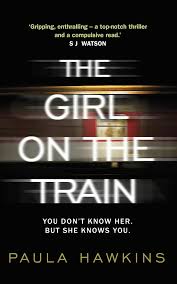
The Girl on the Train by Paula Hawkins: Prose Workshop with Helen Hagemann @ the Fremantle Arts Centre, Friday 10th July 1pm-3pm.  Reading an extract from the novel, together with writing exercises and discussions on train journeys.

Venue:  Room 3, Upstairs, North Wing
Cost:  $20 OOTA - $25 NON-OOTA

The Girl on the Train (2015) is a best-selling novel by British author Paula Hawkins. The novel debuted at number one on the The New York Times Fiction Best Sellers of 2015 list (the combined print and e-book list) dated February 1, 2015, and remained in the top position for 13 consecutive weeks as of the list dated April 26, 2015. By early March 2015 the novel had sold over 1 million copies, and 1.5 million by April. Many reviews referred to the book as the next Gone Girl, a popular 2012 novel, which the publishers were happy to highlight.
The film rights have been acquired by Dreamworks for Marc Platt Productions.  

When Paula Hawkins first arrived in London, at 17, she spent a lot of time staring into other people’s houses from the District Line. She’d grown up in Zimbabwe and had never been on public transport until she made her first journey on the overground stretch from Putney Bridge to Earls Court. The experience of winding past back gardens and open windows was ‘completely alien’ but somehow reassuring. ‘There’s an odd sense of connection you have when you go past the same house each day,’ she says. ‘I had just arrived in London and hardly knew anyone. I often wondered: “What would I do if I saw something sinister?” Still, like a lot of overnight successes, Hawkins put in a lot of groundwork. She grew up in suburban Harare, where her father was an economist, and had what she calls an idyllic childhood — ‘tennis courts, swimming pools’ — only realising the inequities of post-colonial Zimbabwe as she got older. She moved to England in search of better opportunities in 1989 and graduated from Oxford with a degree in politics, philosophy and economics. She then spent 15 years as a financial journalist. Her most recent post was at The Times (which entailed a ‘horrific’ Clapham-Wapping commute), but while she liked the atmosphere of the newsroom, she says she was never a ‘natural newshound’. Even now she jokes that research is not her strong point and imagines her police procedural details in the book are all wrong: ‘Sometimes it’s interesting, sometimes I’d just rather make it up.’


Sunday, 31 May 2015

Guy Salvidge will conduct our Prose class on Friday,  26th June at 1.00pm @ the Fremantle Arts Centre. Cost: $20 OOTA $25 Non-OOTA
Room 3, Upstairs North Wing
No booking required. Just come along!
‘Writing Your Novel: How to Stick It Out and Get It Done’ with Guy Salvidge
In this session, participants will be asked to consider:
- how to fit writing a novel around work/life time constraints
- getting into a routine that works for you
- editing tips and techniques
- common pitfalls and stumbling blocks
- being the tortoise and not the hare. 


Guy Salvidge was born in England in 1981 and moved to Western Australia in 1990. In 1996, he won the Roy Grace English Scholarship for short fiction, which motivated him to pursue a writing career. Guy studied English at Curtin University, majoring in Literature and Creative Writing, and graduated in 2002 with Honours. Completing a Graduate Diploma in Education in 2005, Guy embarked on a career as a high-school English teacher. He lives in the Avon Valley with his wife and children. Guy's first novel to see print, The Kingdom of Four Rivers, was published in 2009 by Equilibrium Books. His second, Yellowcake Springs, won the 2011 IP Picks Best Fiction Award and was shortlisted for the 2012 Norma K Hemming Award. The sequel, Yellowcake Summer was published in 2013. Guy is currently working on a crime novel Thirsty Work (which he started in 2013 while Writer-in-Residence at the KSP Writers' Centre) and he is the co-editor (with Andrez Bergen) of The Tobacco Stained Sky: An Anthology of Post Apocalyptic Noir. In 2013, his short stories were published in Alien Sky, The Tobacco-Stained Sky, Tincture Journal and The Great Unknown.
Laurie Steed will conduct our Prose class on Friday,  12th June at 1.00pm @ the Fremantle Arts Centre. Cost: OOTA $20/ Non-OOTA $25. Room 3, Upstairs North Wing. No Booking required. Just come along!

His workshop: Uncharted Narratives: Exploring ‘The Third Option’ will inspire you to write using exercises and examples from great short story writers.
Workshop Outline: How does J.D. Salinger play with audience expectation in ‘Teddy’? What is the secret ingredient in Peter Goldsworthy's The List of All Answers? Which single decision in Patrick Cullen’s ‘Scar Tissue’ takes it from memorable to unforgettable?
Looking at short story masters such as Lorrie Moore, Miranda July, and Ryan O’Neill, workshop participants will explore ‘the third option’, a plot technique designed to open up otherwise predictable narratives. The best short story authors already use it often and well. For any writer, it’s a way towards writing memorable, original, and ultimately, more publishable fiction.
Laurie Steed is an author and Ph.D Candidate at the University of Western Australia. His work has been broadcast on BBC Radio 4 and published in Best Australian Stories, The Age, the Review of Australian Fiction, Australian Book Review and elsewhere. He is a member of the Margaret River Press Editorial Board, the winner of the 2012 Patricia Hackett Prize, and a past recipient of fellowships from The University of Iowa, The Sozopol Fiction Seminars and Varuna The Writers House. He lives in Perth and is a member of Out of the Asylum Writers Group, Fremantle: Western Australia.

Saturday, 23 May 2015


The Cat in the Hat by Dr. Seuss
Friday, 29th  May @ 10.00am in the Flax Room of the Grove Library.
This class will combine “Writing for children” as well as finding rhythm for your prose.  We will be reading the whole book of The Cat in the Hat written by Theodor Seuss Geisel in order to discover the poetic meters of children's literature. Writers will have a choice in writing exercises to try their hand at short verse or prose exercises to engage in prose rhythm. 

PLEASE NOTE CHANGE OF VENUE + TIME (the FAC is closed this week for roof renovations).
The Grove Library: 1 Leake Street, Peppermint Grove (It's actually, cnr Leake St and Stirling Highway, Cottesloe)


The Cat in the Hat was first published in 1957. Three years after its debut, the book had already sold over a million copies, and in 2001 Publishers Weekly listed the book at number nine on its list of best-selling children's books of all time. The book's success led to the creation of Beginner Books, a publishing house centred on producing similar books for young children learning to read. In 1983, Geisel said, "It is the book I'm proudest of because it had something to do with the death of the Dick and Jane primers." The book was adapted into a 1971 animated television special and a 2003 live-action film.
POETIC METERS: Geisel wrote most of his books in anapestic tetrameter, a poetic meter employed by many poets of the English literary canon. This is often suggested as one of the reasons that Geisel's writing was so well received.
Anapestic tetrameter consists of four rhythmic units, anapests, each composed of two weak syllables followed by one strong syllable (the beat); often, the first weak syllable is omitted, or an additional weak syllable is added at the end. An example of this meter can be found in Geisel's "Yertle the Turtle".

    "And today the Great Yertle, that Marvelous he
    Is King of the Mud. That is all he can see."


Theodor Seuss Geisel 1904 –1991) was an American writer and cartoonist. He was most widely known for his children's books, which he wrote and illustrated under the pseudonym Dr. Seuss. He had used other pen names such as Theo LeSieg and Rosetta Stone. Geisel published 46 children's books, often characterized by imaginative characters, rhyme, and frequent use of anapestic meter. His most-celebrated books include the bestselling Green Eggs and Ham, The Cat in the Hat, The Lorax, One Fish Two Fish Red Fish Blue Fish, The 500 Hats of Bartholomew Cubbins, Fox in Socks, The King's Stilts, Hop on Pop, Thidwick the Big-Hearted Moose, Horton Hatches the Egg, Horton Hears a Who!, and How the Grinch Stole Christmas!. His works have numerous adaptations, including 11 television specials, four feature films, a Broadway musical and four television series. He won the Lewis Carroll Shelf Award in 1958 for Horton Hatches the Egg and again in 1961 for And to Think That I Saw It on Mulberry Street.

POETRY CLASS TERMS 3-4, 2019

POETRY with Shane McCauley

JULY - DECEMBER
12th, Friday 1pm - early December 2019 1pm-3pm

Website - Now Archived

Twitter


Powered by Blogger.

Search This Blog

Literary news

Australian Children's Poetry
  • visit Poem of the Day

  • About Us

    My Photo
    Writing at the Centre is an independent writing class conducted each Friday at the Fremantle Arts Centre, Print Room, upstairs in the main building.

    PROSE CLASS TERMS 3-4, 2019

    Prose Classes with Chris Konrad
    Chris will work with you each Friday fortnight bringing with him his writing skills and expertise as a published writer and prize winner.
    Dates: Friday 28th June - early December 2019, 1pm - 3pm

    OOTA ANTHOLOGY 2019

    OOTA ANTHOLOGY 2019
    Theme: Place - Closing 31/3/2019

    Dorothy Hewett Exposed as a Miscreant

    Popular Posts