Sunday, 22 May 2016


Workshop: The Origins of Fantasy with Helen Hagemann @ the Fremantle Arts Centre, Friday, 27th May, 1pm-3pm.  This workshop will look at the history of fantasy and how this relates to understanding the modern genre of fantasy writing. Writers will read  excerpts from Sleeping Beauty, Rapunzel, Aladdin's Lamp and The Lord of the Rings, and will work on two writing exercises to inspire new tales.
Venue: Fremantle Arts Centre,
Time: 1-3pm. What to bring:  Notepad, pen, laptop or ipad

Cost:  OOTA $20  - NON-OOTA $25 (ask for membership form to save). Please note: New attendees who arrive without the class fee will be asked to leave. 

A BRIEF HISTORY OF FANTASY LITERATURE 

Fantasy fiction can trace its roots back to ancient mythology, in particular Homer's Odyssey written in the 9th century BC. It chronicles the fictional adventures of a hero returning to Ithaca after the capture of Troy. Beowulf (ca 700AD), the earliest surviving epic poem written in English, is another early work containing fantasy elements - such as witches, monsters and dragons. Perhaps more recognisable to modern audiences, the legend of King Arthur has been told and re-told many times over. Sir Thomas Malory's Le Morte D'Arthur (ca 1470; printed 1485) is recognised as the earliest definitive account of the legend.

William Shakespeare's comedy A Midsummer Night's Dream (1595-96) depicted a wild and fantastical world of fairies, while Gulliver's Travels by Jonathan Swift (1726) is a biting social satire told in four distinct parts - each set in their own fantasy world. Also of note is the literature of German origin, probably beginning around 1785, focusing on the caricature of Baron Münchausen - an aristocratic scoundrel known for telling tongue-in-cheek lies and incredible stories. Many children's fairy tales, particularly those published from 1812-15 by the Brothers Grimm, have also contributed to the development of the fantasy genre. The Brothers Grimm travelled from village to village for thirteen years collecting fairy tales such as 'Cinderella', 'Snow White' and 'Rumpelstiltskin' - and prided themselves on making accurate transcriptions of the stories they were told.

Although many stories containing large doses of fantasy were published in the interim, the next that was to have a major impact was Lewis Carroll's Alice's Adventures in Wonderland (1865). The young heroine finds herself in a bizarre world of pure imagination, full of surreal characters and nonsensical events. The genre well and truly came of age with the publication William Morris' The Wood Beyond the World (1894). A simple romance set in a medieval never-never land, the hero flees his loveless wife and eventually ends up battling a dwarf to free the maiden he loves. Also of note from this period, although far less typical of the genre, is the seminal gothic horror Dracula (1897) by Bram Stoker.

Whilst a handful of fantasy greats were published in the early-20th century, fantasy truly came of age in 1937 with the publication of The Hobbit by J R R Tolkien, followed by the landmark Lord of the Rings in 1954. Along with C S Lewis' Chronicles of Narnia and Ursula K Le Guin's Earthsea series, Tolkien's books helped forge a distinctive identity for the fantasy genre. Fantasy short fiction, often regarded as an adjunct in sci-fi magazines, also got a boost with the first issue of the Magazine of Fantasy & Science Fiction in 1949.

By 1977 with the publication of Terry Brooks' Sword of Shannara, fantasy novels were finally making an impact on bestseller lists. Throughout the late-80s and early-90s sword & sorcery books by David Eddings, Robert Jordan and George R R Martin continued to sell well. In more recent times authors like Guy Gavriel Kay, the boundary-shattering China Miéville and humorists Terry Pratchett & Neil Gaiman are helping to ensure that fantasy literature will have plenty of life left in it for years to come.
Sunday, 8 May 2016

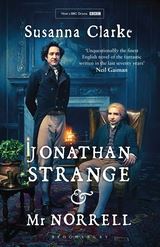
Writing Fantasy Workshop with Helen Hagemann @ the Fremantle Arts Centre, Friday, 13th May, 1pm-3pm.  This workshop will look at the ten major writing tips for writing Fantasy. Writers will read an excerpt from Susanna Clarke's Fantasy novel Jonathan Strange & Mr Norrell (also a BBC TV series), and will be given two writing exercises with prompts.
Venue: Fremantle Arts Centre, Room 2
Time: 1-3pm
What to bring:  Notepad, pen, laptop or ipad
Cost:  OOTA $20  - NON-OOTA $25 (ask for membership form to save). 
Please note: New attendees who arrive without the class fee will be asked to leave.


MAJOR SEVEN-PART BBC TV SERIES. OVER 1 MILLION COPIES SOLDTwo magicians shall appear in England. The first shall fear me; the second shall long to behold me ...

The year is 1806. England is beleaguered by the long war with Napoleon, and centuries have passed since practical magicians faded into the nation's past. But scholars of this glorious history discover that one remains: the reclusive Mr Norrell whose displays of magic send a thrill through the country. Proceeding to London, he raises a beautiful woman from the dead and summons an army of ghostly ships to terrify the French. Yet the cautious, fussy Norrell is challenged by the emergence of another magician: the brilliant novice Jonathan Strange. Young, handsome and daring, Strange is the very opposite of Norrell. So begins a dangerous battle between these two great men which overwhelms the one between England and France. And their own obsessions and secret dabblings with the dark arts are going to cause more trouble than they can imagine.


Reviews

“Unquestionably the finest English novel of the fantastic written in the last seventy years. It's funny, moving, scary, otherworldly, practical and magical ... Closing Jonathan Strange & Mr Norrell after 800 pages my only regret was that it wasn't twice the length” –  Neil Gaiman
“The language of the book is such a pleasure you'd probably want to go and read it anyway” –  Lauren Laverne, BBC Radio 6
“Best novel I've ever read” –  Richard Madeley
“'An elegant and witty historical fantasy which deserves to be judged on its own (considerable) merit'” –  Sunday Telegraph
“'Full of spells, bad weather, statues that talk, haunted ballrooms and sinister gentlemen with thistledown hair ... be enchanted! *****'” –  Elle
“'A nourishing, 19th-century-style novel that will warm readers through any number of dark and stormy nights ... Clarke makes her magical story ridiculously engrossing'” –  Daily Telegraph
“'This is, in both the precise and the colloquial sense, a fabulous book ... a highly original and compelling work'” –  Sunday Times
“I read it years ago and loved it … They've preserved the scale and majesty of the story … So you have credible, fully imagined characters recognisably of the same world we inhabit” –  Bertie Carvel
“I read the book and loved it. It sort of obsessed me for a while and I felt an affinity with what turned out to be my character, Vinculus. I found the footnotes addictive! If there wasn't one on the next page I would be disappointed” –  Paul Kaye
Bookmark and Share


Jonathan Strange & Mr Norrell BBC Trailer


- See more at: http://www.bloomsbury.com/uk/jonathan-strange-and-mr-norrell-9781408856888/#sthash.m3RuKvoK.dpuf
 

MAJOR SEVEN-PART BBC TV SERIES. OVER 1 MILLION COPIES SOLD

Two magicians shall appear in England. The first shall fear me; the second shall long to behold me ...

The year is 1806. England is beleaguered by the long war with Napoleon, and centuries have passed since practical magicians faded into the nation's past. But scholars of this glorious history discover that one remains: the reclusive Mr Norrell whose displays of magic send a thrill through the country. Proceeding to London, he raises a beautiful woman from the dead and summons an army of ghostly ships to terrify the French. Yet the cautious, fussy Norrell is challenged by the emergence of another magician: the brilliant novice Jonathan Strange. Young, handsome and daring, Strange is the very opposite of Norrell. So begins a dangerous battle between these two great men which overwhelms the one between England and France. And their own obsessions and secret dabblings with the dark arts are going to cause more trouble than they can imagine.

Reviews


“Unquestionably the finest English novel of the fantastic written in the last seventy years. It's funny, moving, scary, otherworldly, practical and magical ... Closing Jonathan Strange & Mr Norrell after 800 pages my only regret was that it wasn't twice the length” –  Neil Gaiman “The language of the book is such a pleasure you'd probably want to go and read it anyway” –  Lauren Laverne, BBC Radio 6
“Best novel I've ever read” –  Richard Madeley
“'An elegant and witty historical fantasy which deserves to be judged on its own (considerable) merit'” –  Sunday Telegraph
“'Full of spells, bad weather, statues that talk, haunted ballrooms and sinister gentlemen with thistledown hair ... be enchanted! *****'” –  Elle
“'A nourishing, 19th-century-style novel that will warm readers through any number of dark and stormy nights ... Clarke makes her magical story ridiculously engrossing'” –  Daily Telegraph
“'This is, in both the precise and the colloquial sense, a fabulous book ... a highly original and compelling work'” –  Sunday Times
“I read it years ago and loved it … They've preserved the scale and majesty of the story … So you have credible, fully imagined characters recognisably of the same world we inhabit” –  Bertie Carvel
“I read the book and loved it. It sort of obsessed me for a while and I felt an affinity with what turned out to be my character, Vinculus. I found the footnotes addictive! If there wasn't one on the next page I would be disappointed” –  Paul Kaye


MAJOR SEVEN-PART BBC TV SERIES. OVER 1 MILLION COPIES SOLDTwo magicians shall appear in England. The first shall fear me; the second shall long to behold me ...

The year is 1806. England is beleaguered by the long war with Napoleon, and centuries have passed since practical magicians faded into the nation's past. But scholars of this glorious history discover that one remains: the reclusive Mr Norrell whose displays of magic send a thrill through the country. Proceeding to London, he raises a beautiful woman from the dead and summons an army of ghostly ships to terrify the French. Yet the cautious, fussy Norrell is challenged by the emergence of another magician: the brilliant novice Jonathan Strange. Young, handsome and daring, Strange is the very opposite of Norrell. So begins a dangerous battle between these two great men which overwhelms the one between England and France. And their own obsessions and secret dabblings with the dark arts are going to cause more trouble than they can imagine.


Reviews

“Unquestionably the finest English novel of the fantastic written in the last seventy years. It's funny, moving, scary, otherworldly, practical and magical ... Closing Jonathan Strange & Mr Norrell after 800 pages my only regret was that it wasn't twice the length” –  Neil Gaiman
“The language of the book is such a pleasure you'd probably want to go and read it anyway” –  Lauren Laverne, BBC Radio 6
“Best novel I've ever read” –  Richard Madeley
“'An elegant and witty historical fantasy which deserves to be judged on its own (considerable) merit'” –  Sunday Telegraph
“'Full of spells, bad weather, statues that talk, haunted ballrooms and sinister gentlemen with thistledown hair ... be enchanted! *****'” –  Elle
“'A nourishing, 19th-century-style novel that will warm readers through any number of dark and stormy nights ... Clarke makes her magical story ridiculously engrossing'” –  Daily Telegraph
“'This is, in both the precise and the colloquial sense, a fabulous book ... a highly original and compelling work'” –  Sunday Times
“I read it years ago and loved it … They've preserved the scale and majesty of the story … So you have credible, fully imagined characters recognisably of the same world we inhabit” –  Bertie Carvel
“I read the book and loved it. It sort of obsessed me for a while and I felt an affinity with what turned out to be my character, Vinculus. I found the footnotes addictive! If there wasn't one on the next page I would be disappointed” –  Paul Kaye
Bookmark and Share


Jonathan Strange & Mr Norrell BBC Trailer


- See more at: http://www.bloomsbury.com/uk/jonathan-strange-and-mr-norrell-9781408856888/#sthash.m3RuKvoK.dpuf

Monday, 25 April 2016


Prose Workshop: Facts in Fiction and Non-Fiction with Helen Hagemann @ the Fremantle Arts Centre, Friday, 29th April 1pm-3pm.  This workshop will look at the ways to include "facts" in your fiction or non-fiction. The class will read excerpts on various points of view by Melissa Donovan, Emma Darwin, Roy Clark and Geoff Dyer of the Guardian. Writers will be able to apply these ideas in 2-3 writing exercises. Venue: Fremantle Arts Centre, Room 2, Time: 1-3pm

Cost:  OOTA $20  - NON-OOTA $25 (ask for membership form to save).

Including Facts in Fiction and Non-Fiction 

Fiction is neither real nor unreal but a world existing between places of factual certainty and the avenues of an author’s imagination.
The first thing you need to know about writing fiction, whatever the genre, is that you must get your facts right. Those titbits of information lend fiction its authenticity, so it’s essential that you do them justice. A reader will only believe a lie for as long as it holds some truth, and those truths have to be accurate.
But how do you do it? How do you take the everyday and draw a new existence from it? How do you write fiction based on facts?
You need two tools at your command before you begin: experience (personal, professional, or both) and the ability to research.
Armed with these, you can then pick any number of methods from the following list to make your fiction come alive in a reader’s hands.

Sunday, 10 April 2016

Critiquing Workshop with Helen Hagemann @ the Fremantle Arts Centre, Friday, 15th April 11.00am - 12.45pm.  This workshop will be held in the FAC Cafe (small room) due to the non-availability of our usual writing room. Since we are a little put out this week, the best option is a chance to do some critiquing.
 WHAT YOU NEED TO KNOW
Writers are asked to bring along up to 4 pages of their work in Times New Roman, 12, 1.5 spacing (+ extra copies for our eyes). This can be either a short story, part of your novel, your memoir, or part of a non-fiction work that you are having difficulty with. We will critique for an hour, followed by rewriting that section on the day. Please note: Our critiquing group will still meet at 10.00am and run for one hour, followed by class. Members also have the chance to send 8 pages, or just bring on the day. Note also:  You will need to "fully charge" ipads and laptops as there are no power-points available. Beginners who do not have a project on the go, are very welcome to join us.  Many thanks, Helen

Saturday, 26 March 2016

Prose Workshop: The Author is Three-In-One: Learning how to distance the author from narrator and character with Helen Hagemann @ the Fremantle Arts Centre, Friday, 1st April, 1pm-3pm. 
  Class to read part of Frederick Reiken's essay titled The Author-Narrator-Character Merge from the anthology A Kite in the Wind. As well, writers will have the opportunity to write different POV versions  (exercises) using the idea of psychic distance of the author from narrator and character
Please Note: Class will be conducted in Room 2 (the old large room) upstairs at the Fremantle Arts Centre. 

This workshop acknowledges two authors, Julie Proudfoot and Megan Ward who alerted me to the book A Kite in the Wind and within its pages a valuable essay titled, The Author-Narrator-Character Merge: Why Many First-Time Novelists Wind Up with Flat, Uninteresting Protagonists by Frederick Reiken.


Sunday, 13 March 2016

Prose Workshop: Writing a Synopsis with Helen Hagemann @ the Fremantle Arts Centre, Friday, 18th March 1pm-3pm.  This workshop is a response to members of the class asking for a guide to writing a synopsis. Class to read various examples and texts as well as writers will be given the opportunity to write several versions of a synopsis eg. 200, 300 or 500 words of their current novel or future novel in progress. Beginners who are not writing a novel will be given alternative exercises.

Saturday, 27 February 2016

Prose Workshop: Meta Fiction with Helen Hagemann @ the Fremantle Arts Centre, Friday, 4th March 1pm-3pm.  This workshop will look at the elements that make a work meta-fictional incl. the many variations. The class will read excerpts from meta-fiction by Debra Adelaide (The Women's Pages) and Thea Astley (Drylands). Writers will be given a long list of works to discover this genre for themselves, as well as 2-3 writing exercises. 
Venue: Fremantle Arts Centre, Room 3
Time: 1-3pm
Cost:  OOTA $20  - NON-OOTA $25 (ask for membership form to save).


What is Meta Fiction?
 Meta-fiction refers to fictional works that draw attention to the fact that they are a work of fiction.

 
Metafiction is a literary device used self-consciously and systematically to draw attention to a work's status as an artefact. It poses questions about the relationship between fiction and reality, usually using irony and self-reflection. It can be compared to presentational theatre, which does not let the audience forget it is viewing a play; metafiction forces readers to be aware that they are reading a fictional work.

A guide to understanding meta-fiction.
    A story about a writer who creates a story
    A story that features itself (as a narrative or as a physical object) as its own prop or MacGuffin
    A story containing another work of fiction within itself
    A story addressing the specific conventions of story, such as title, character conventions,
    paragraphing or plots
    A novel where the narrator intentionally exposes him or herself as the author of the story
    A book in which the book itself seeks interaction with the reader
    A story in which the readers of the story itself force the author to change the story
    Narrative footnotes, which continue the story while commenting on it
    A story in which the characters are aware that they are in a story
    A story in which the characters make reference to the author or his previous work


Tuesday, 9 February 2016


Prose Workshop: Fast Fiction Friday with Helen Hagemann @ the Fremantle Arts Centre, Friday, 19th February 1pm-3pm.  This workshop is a 'Guide to Outlining and Writing a Novel in 30 Days'. Class to read various examples and texts as well as writers will be given the ways and means to start a novel.

National Novel Writing Month (often shortened to NaNoWriMo, "na-noh-RY-moh"),[2] is an annual, Internet-based creative writing project that takes place during the month of November. NaNoWriMo challenges participants to write 50,000 words (the minimum number of words for a novel) from November 1 until the deadline at 11:59PM on November 30. The goal of NaNoWriMo is to get people writing and keep them motivated throughout the process. The website provides participants with tips for writer's block, local places writers participating in NaNoWriMo are meeting, and an online community of support. The idea is to focus on completion instead of perfection. NaNoWriMo focuses on the length of a work rather than the quality, encouraging writers to finish their first draft so that it can later be edited at the author's discretion.[3] NaNoWriMo's main goal is to encourage creativity worldwide.[4] The project started in July 1999 with 21 participants, but by the 2010 event, over 200,000 people took part and wrote a total of over 2.8 billion words.[5]
Writers wishing to participate first register on the project's website, where they can post profiles and information about their novels, including synopses and excerpts. Word counts are validated on the site, with writers submitting a copy of their novel for automatic counting. Municipal leaders and regional forums help connect local writers, holding writing events and providing encouragement.

Referencehttps://en.wikipedia.org/wiki/National_Novel_Writing_Month

POETRY CLASS TERMS 3-4, 2019

POETRY with Shane McCauley

JULY - DECEMBER
12th, Friday 1pm - early December 2019 1pm-3pm

Website - Now Archived

Twitter


Powered by Blogger.

Search This Blog

Literary news

Australian Children's Poetry
  • visit Poem of the Day

  • About Us

    My Photo
    Writing at the Centre is an independent writing class conducted each Friday at the Fremantle Arts Centre, Print Room, upstairs in the main building.

    PROSE CLASS TERMS 3-4, 2019

    Prose Classes with Chris Konrad
    Chris will work with you each Friday fortnight bringing with him his writing skills and expertise as a published writer and prize winner.
    Dates: Friday 28th June - early December 2019, 1pm - 3pm

    OOTA ANTHOLOGY 2019

    OOTA ANTHOLOGY 2019
    Theme: Place - Closing 31/3/2019

    Dorothy Hewett Exposed as a Miscreant

    Popular Posts